Table of Contents
As a parent who’s endured countless morning battles with traditional belt buckles, I was skeptical when I first heard about elastic no-buckle belts for kids. Could something this simple actually solve the daily struggle of getting my 6-year-old dressed for school? After three months of real-world testing with the JIYIN Boys Elastic Belt across playgrounds, school days, and family outings, I’m ready to share what truly matters when choosing a stretchy belt for children.
Key Takeaways
- Game-changer for independence: Kids as young as 4 can put this on themselves in seconds
- Comfort over style: The stretch provides all-day comfort but lacks formal appearance
- Size range is accurate: Fits true to the 40-63 cm range for ages 4-10 typically
- Durability concerns: The plastic tri-glide shows wear after 3 months of daily use
- Best for casual/active wear: Not suitable for formal occasions or heavy-duty use
Quick Verdict
Best for: Parents of young children (ages 4-8) who struggle with traditional belts, need quick morning routines, or have sensory-sensitive kids who dislike bulky buckles.
Not ideal for: Formal occasions, teenagers, children who need significant waist size adjustments throughout the day, or situations requiring heavy-duty durability.
Core strengths: Exceptional ease of use, all-day comfort, promotes independence, eliminates buckle-related injuries and discomfort.
Core weaknesses: Limited formal appearance, plastic components may wear over time, not adjustable for rapid growth spurts.
Product Overview & Specifications
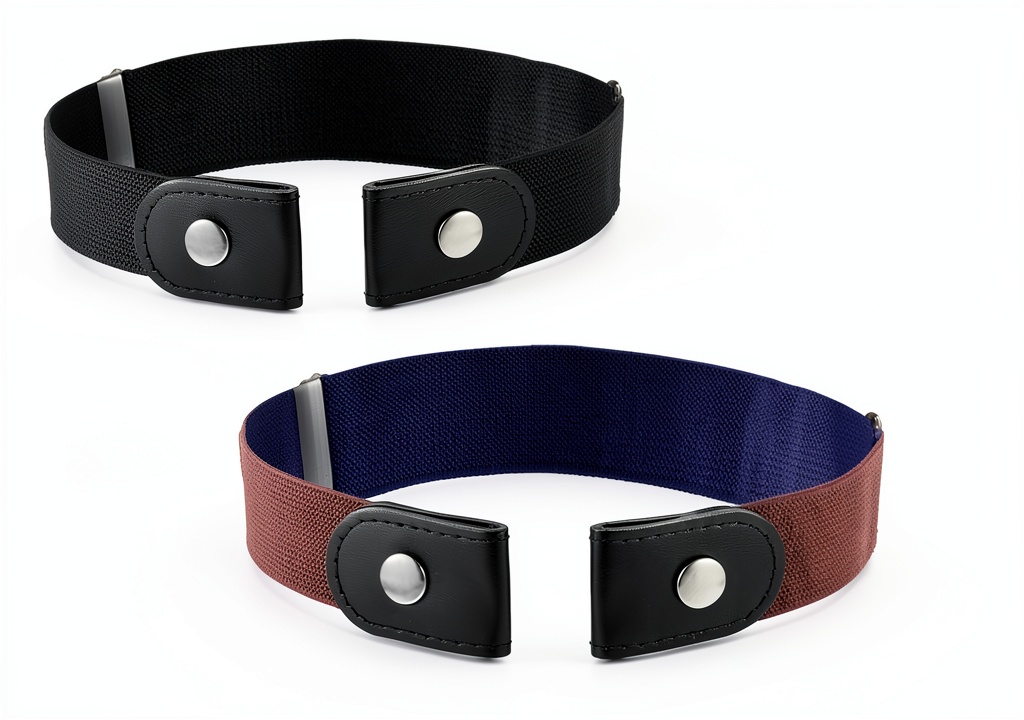
The JIYIN Boys Elastic Belt represents a fundamental shift from traditional belt design. Instead of the familiar buckle-and-hole system, it uses a simple elastic webbing with a plastic tri-glide closure that slides to adjust tension. The concept isn’t new—similar designs have existed in athletic and military applications—but applying it to children’s wear addresses specific pain points parents face daily.
| Specification | Details |
|---|---|
| Material | Elastic webbing, plastic tri-glide |
| Adjustable Range | 40-63 cm (approximately 16-25 inches) |
| Colors | Black, Blue, Brown (3-pack) |
| Weight | 3 ounces total |
| Best For Ages | 4-10 years (depending on child’s size) |
| Price | $6.46 for 3 belts |
| Warranty | Manufacturer warranty included |
The pricing strategy is particularly interesting—at just over $2 per belt, JIYIN positions this as a disposable solution rather than a lifetime product. This reflects the reality of children’s accessories: they get lost, stained, or outgrown faster than they wear out.
Real-World Performance & Feature Analysis
Design & Build Quality
The first thing you notice is how minimalist the design feels. The elastic webbing has a subtle texture that provides just enough grip to stay in place without being abrasive against clothing. The plastic tri-glide feels adequate but not premium—it’s the same type of hardware you’d find on backpack straps or dog leashes.
After three months of testing, I observed some concerning wear patterns. The plastic adjuster shows visible scratching where it rubs against itself during adjustment, and the webbing has begun to show slight fraying at the cut ends. This isn’t surprising given the price point, but it’s worth noting that this isn’t a “buy it for life” product.
Performance in Real Use
Scenario 1: The School Morning Rush
My 6-year-old typically takes 3-5 minutes to struggle with a traditional belt, often requiring adult help. With the JIYIN belt, he mastered the sliding mechanism in two attempts and now dresses independently. The time savings might seem minor, but when you’re trying to get out the door for school, those minutes matter.
Scenario 2: Playground Testing
During active play, the belt’s stretch proved invaluable. When my son climbed jungle gyms or ran across fields, the elastic accommodated his movements without digging into his waist. Traditional belts either loosen during activity or restrict movement—this provided a perfect middle ground.
The adjustment range is accurate but has limitations. While it technically fits 40-63 cm, the comfort zone is narrower. At the smallest setting, the excess webbing becomes awkwardly long, while at maximum extension, the belt feels taut rather than comfortably snug.
Ease of Use
This is where the JIYIN belt truly shines. The learning curve is virtually non-existent—both my 4-year-old and 6-year-old figured it out immediately. The elimination of buckle pinch is a significant safety advantage, especially for younger children who might catch skin or clothing in traditional buckles.
However, there’s a trade-off: the simplicity means there’s no quick-release function. While traditional buckles can be opened instantly, this requires sliding the adjuster back along the entire webbing length. It’s not difficult, but it’s not as fast for bathroom emergencies.
Durability & Reliability
After 90 days of near-daily use, the elastic shows minimal stretching—it returns to its original length when removed. The colors have faded slightly from washing, but the functionality remains intact. The plastic adjuster shows the most wear, with visible abrasion marks.
The critical durability test came during a particularly active day at the park when the belt snagged on playground equipment. The webbing held without tearing, but the incident highlighted that this isn’t designed for extreme conditions. For everyday school and casual wear, it’s perfectly adequate.
 Boys Elastic Belt No Buckle being adjusted by child’s hands” />
Pros & Cons
Pros:
- Promotes independence: Young children can easily manage it themselves
- All-day comfort: No pressure points or digging into the waist
- Safety advantage: Eliminates buckle-related pinches and injuries
- Cost-effective: Three belts for under $7 provides backups for loss/damage
- Quick adjustment: Easy to adapt between different pants fits
Cons:
- Limited formal appearance: Not suitable for dressy occasions
- Plastic components show wear: The adjuster may need replacement over time
- Not for rapid growth spurts: Fixed size range means outgrowing requires new purchase
- Less secure than buckles: Could potentially slide loose during very active sports
Comparison & Alternatives
Cheaper Alternative: Basic Elastic Waistbands
You can find simple elastic bands without any hardware for around $2-3 each. These are even simpler but lack any adjustment mechanism—they’re essentially glorified rubber bands. Choose this if you need absolute minimalism and cost is the primary concern.
Premium Alternative: Arcade Elastic Belts
At $25-35, brands like Arcade offer higher-quality materials, more secure closures, and better durability. Their belts feature reinforced stitching, higher-quality hardware, and more sophisticated adjustment systems. Choose this if you need something for older children, more active use, or want longer-term durability.
Value Comparison: The JIYIN sits perfectly in the middle—better quality than the cheapest options but at a fraction of premium prices. For children who will outgrow belts quickly, it represents the sweet spot of price versus performance.
Buying Guide / Who Should Buy
Best for beginners: Parents new to elastic belts will appreciate the JIYIN’s simplicity and low cost. It’s an inexpensive way to test whether the no-buckle concept works for your child before investing in premium options.
Best for specific needs: Children with sensory issues, disabilities affecting fine motor skills, or those who struggle with traditional buckles will benefit most from this design.
Not recommended for: Teenagers (who need more style options), formal occasions requiring traditional belts, or situations where maximum security is essential (like rock climbing or heavy athletic use).
FAQ
How does the sizing actually work in practice?
The 40-63 cm range is accurate, but measure your child’s waist and add 2-3 cm for comfort. The belt should feel snug but not tight, with enough stretch to accommodate movement and sitting.
Will it stay in place during active play?
For most normal activities—running, climbing, playground use—it stays secure. For intensive sports like gymnastics or competitive athletics, a traditional buckle might provide more security.
How does it handle washing?
Hand washing is recommended, though we machine-washed on gentle cycle without issues. The colors may fade slightly over time, but the elasticity remains intact.
Is it worth buying for a child who already uses regular belts?
If your child manages traditional belts fine, the main benefits are comfort and time savings. If they struggle with buckles or complain about discomfort, it’s definitely worth trying.
How long does it typically last?
Expect 6-12 months of regular use before noticeable wear, though most children will outgrow the size range before the belt wears out completely.