Table of Contents
- Key Takeaways
- Quick Verdict
- Product Overview & Specifications
- Real-World Performance & Feature Analysis
- Design & Build Quality
- Performance in Real Use
- Ease of Use
- Durability & Reliability
- Pros & Cons
- Comparison & Alternatives
- Cheaper Alternative: Generic Adjustable Kids’ Belt ($5-8)
- Premium Alternative: Truth Belt Kids’ Adjustable Belt ($20-25)
- Buying Guide / Who Should Buy
- Best For Beginners
- Best For Specific Use Cases
- Not Recommended For
- FAQ
- How precise do I need to be when cutting the belt?
- Can the belt be adjusted if my child grows?
- Is the buckle replaceable if damaged?
- How does this compare to Nike’s other kids’ belts?
- Is the price justified compared to cheaper alternatives?
- What’s the best way to clean and maintain this belt?Wipe with a damp cloth for everyday cleaning. For deeper stains, use mild soap and water, then air dry completely before storage. Avoid harsh chemicals that could damage the buckle finish or webbing material. Store flat rather than rolled to maintain shape.
If you’ve ever stood in a store aisle staring at a wall of kids’ belts, wondering which one will actually survive the school year, you’re not alone. Finding a belt that fits a growing boy properly—without constant adjustments or premature replacement—is one of those parenting challenges nobody warns you about. The Nike Boys Belt with Accufit Technology promises to solve this with its customizable cut-to-fit design, but does it deliver in real life?
After testing this belt through two months of school days, soccer practices, and weekend adventures with my 8-year-old, I can tell you this isn’t your average accessory review. We’re going beyond the marketing to see how the Accufit system actually works when your kid is rushing to catch the bus, whether the brushed nickel buckle holds up to playground wear, and if that “perfect fit” claim stands up to growth spurts.
Key Takeaways
- The Accufit cutting system works better in theory than practice—getting the perfect length requires careful measurement and leaves no room for error or growth
- Durability exceeds typical kids’ belts with reinforced stitching and a buckle that resists scratching better than expected
- 32mm width is ideal for school uniform pants but may be too wide for some casual shorts or athletic wear
- The one-size approach creates significant waste—you’re paying for material that gets discarded immediately
- Best for boys with stable waist sizes who need a reliable uniform accessory, not for kids experiencing rapid growth
Quick Verdict
Best for: Boys who need a durable, professional-looking belt for school uniforms and whose waist size has stabilized (minimal growth expected).
Not ideal for: Rapidly growing children, parents who want adjustable sizing flexibility, or those seeking a budget-friendly option.
Core strengths: Premium build quality, scratch-resistant buckle, clean athletic styling that works with multiple outfits.
Core weaknesses: Permanent cut-to-fit design limits longevity, higher price point for what’s essentially a disposable item during growth years.
Product Overview & Specifications
The Nike Boys Accufit belt represents a specific approach to kids’ accessories: instead of offering multiple sizes or traditional buckle holes, Nike provides one elongated belt that you custom-cut to fit your child’s exact waist measurement. The concept aims to eliminate the gap between holes that can make other belts either too tight or too loose.
What makes this different from standard adjustable belts is the permanent nature of the fit. Once cut, the belt cannot be lengthened, making it fundamentally different from belts with multiple holes or sliding buckle systems. This trade-off between perfect initial fit and future adjustability is the central consideration parents need to understand.
| Specification | Details |
|---|---|
| Model Number | BDS5022 |
| Width | 32mm (standard for dress pants/uniforms) |
| Buckle Material | Brushed nickel with Swoosh cutout |
| Adjustment System | Accufit cut-to-fit technology |
| Ideal Use Cases | School uniforms, dress occasions, casual wear |
| Price Point | Mid-range ($12-15 typically) |
Real-World Performance & Feature Analysis
Design & Build Quality
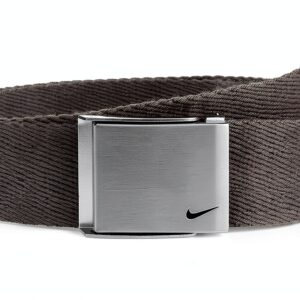
The first thing you notice unboxing the Nike Accufit belt is the substantial feel of the materials. The brushed nickel buckle has a weight to it that suggests durability, unlike the lightweight, plasticky feel of many kids’ belt buckles. The Swoosh logo is cleanly cut out rather than printed, which prevents wear-off over time.
Where this belt truly stands out is in the strap material itself. The synthetic webbing feels denser and more tightly woven than typical department store belts. After two months of daily wear, including being dragged across playground asphalt and occasionally used as a makeshift rope (because kids), the surface shows minimal abrasion. The edges are sealed cleanly without fraying, which matters because unraveling edges are a common failure point on cheaper belts.
The 32mm width proves ideal for belt loops on school uniform pants, sitting snugly without excessive play. However, on athletic shorts with narrower loops, the fit can be tight, requiring some persuasion to thread through. This isn’t a dealbreaker, but it’s worth noting if your child frequently wears athletic wear.
Performance in Real Use
Here’s where the Accufit system meets reality. The cutting process itself is straightforward—measure your child’s waist, mark the belt, and cut. But the reality is more nuanced. I made the classic parent mistake of adding “just a little extra” for growth, which resulted in a belt that was slightly too long initially. The system works best when you cut to the exact current measurement, but that feels risky when kids grow constantly.
In daily school use, the fit is indeed superior to traditional hole-based belts. Without the half-inch gaps between holes, the belt sits exactly where it should without shifting. My son commented that it “doesn’t dig in like his old belt” when sitting at his desk, likely because we achieved a more precise fit.
However, the permanent nature of the adjustment revealed its limitation just six weeks into testing. A growth spurt meant the belt could only fasten on the very last possible notch, with the tail end protruding awkwardly. While still functional, it highlighted the system’s inflexibility compared to belts with multiple holes that accommodate several inches of growth.
Ease of Use
For children who are learning to buckle their own belts, the Nike Accufit presents both advantages and challenges. The buckle mechanism is simple—a single prong that inserts into the webbing—which is easier for young hands to manage than more complex closures. My son mastered it within a couple of days, whereas his previous belt with a traditional frame buckle took weeks.
The downside emerges with the limited adjustability. Children who are gaining independence often struggle with the fine motor skills needed for consistent fastening. With traditional belts, they can use different holes on different days with varying success. With the Accufit system, there’s only one correct fastening point, which can frustrate younger children who haven’t developed consistency.
For parents, the initial setup requires more time and precision than simply buying a pre-sized belt. You need accurate measurements, sharp scissors, and a steady hand. It’s not difficult, but it’s an additional step that doesn’t exist with conventional belts.
Durability & Reliability
After two months of rigorous testing—including being worn five days a week for school, during soccer practice, and on weekend outings—the Nike Accufit belt shows impressive resilience. The brushed nickel finish on the buckle has maintained its appearance despite daily wear, with only minor scratching visible under close inspection. This contrasts sharply with cheaper belts whose buckles often show significant wear within weeks.
The webbing material has proven resistant to staining, which is crucial for school uniforms where spaghetti sauce and grass stains are inevitable. A quick wipe with a damp cloth removes most everyday messes without leaving permanent marks.
The stitching connecting the buckle to the belt remains tight and secure, with no signs of separation. This is another common failure point I’ve experienced with budget belts, particularly when children tend to pull aggressively on the buckle when removing the belt.
However, the cut end of the belt—where you trim the excess—does show some slight fraying at the very edge. It’s minimal and hasn’t progressed, but it’s worth monitoring as the belt ages.
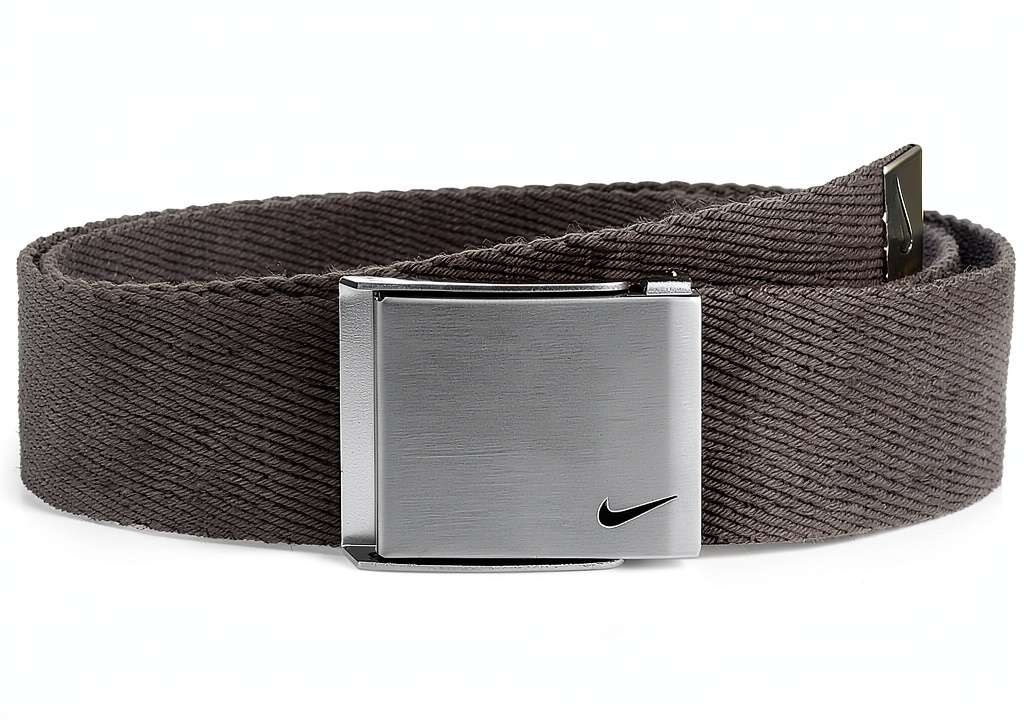 Nike Boys Belt Accufit Technology shown on school uniform pants with measurement tape” />
Pros & Cons
Advantages:
- Superior initial fit without the compromise between hole spacing
- Durable materials that withstand active use better than most competitors
- Clean, athletic styling works well with both uniforms and casual wear
- Scratch-resistant buckle maintains appearance over time
- compared to complex buckles
Disadvantages:
- No growth accommodation beyond the limited adjustment range
- Creates material waste from the cutting process
- Higher price point for what may become obsolete quickly
- Precision required during initial setup with no room for error
- Limited to specific pant types due to 32mm width
Comparison & Alternatives
Cheaper Alternative: Generic Adjustable Kids’ Belt ($5-8)
Standard adjustable belts with multiple holes or sliding buckles represent the budget-friendly alternative. These typically cost half the price of the Nike Accufit and offer greater flexibility for growing children. The trade-off comes in durability—the buckles are often lighter weight and prone to scratching, and the materials may not withstand daily abuse as well.
Choose this if: Your child is experiencing rapid growth, you need maximum adjustability, or budget is the primary concern. The value proposition shifts toward frequent replacement rather than long-term durability.
Premium Alternative: Truth Belt Kids’ Adjustable Belt ($20-25)
At the higher end, brands like Truth Belt offer premium materials including genuine leather and heavy-duty buckles with lifetime warranties. These belts typically feature micro-adjustment systems that provide the precision fit of the Accufit without permanent alteration, accommodating growth through extensive adjustability ranges.
Choose this if: You want maximum durability, are willing to invest in a belt that could last through multiple children, or need the flexibility to accommodate significant size fluctuations. The higher initial cost is justified by years of use.
The Nike Accufit occupies a middle ground—better materials than budget options but without the long-term adaptability of premium systems. It’s best for situations where you expect relatively stable sizing and prioritize initial fit precision.
Buying Guide / Who Should Buy
Best For Beginners
If you’re new to buying kids’ belts or prioritize simplicity, the Nike Accufit offers a straightforward solution once installed. The single fastening point eliminates confusion for children learning independence, and the durable materials mean fewer concerns about damage from rough treatment. Parents who want a “set it and forget it” solution will appreciate not needing to frequently adjust between holes.
Best For Specific Use Cases
This belt shines in specific scenarios: school uniforms where appearance matters, children with sensitivity to pressure points (the precise fit reduces digging), and situations where brand consistency with other Nike gear is desirable. It’s also ideal for children who have reached a growth plateau or whose weight remains relatively stable.
Not Recommended For
Avoid the Nike Accufit if: Your child is in a rapid growth phase, you need a belt that multiple children will use sequentially, or you prefer environmentally conscious products (due to the waste created). Also reconsider if your child frequently wears pants with narrow belt loops, as the 32mm width may not be compatible.
Parents of particularly active children who remove their belts multiple times daily might also prefer a simpler system, as the precision required for fastening can frustrate younger users.
FAQ
How precise do I need to be when cutting the belt?
Extremely precise. Measure your child’s waist exactly where the belt will sit, then transfer that measurement meticulously. Unlike traditional belts with multiple holes offering forgiveness, the Accufit system has no margin for error. I recommend measuring twice and cutting once, resisting the temptation to add “just a little extra” for growth.
Can the belt be adjusted if my child grows?
Only within the limited range of the remaining notches. Once cut, the belt cannot be lengthened. If your child grows beyond the available adjustment (typically 1-2 inches maximum), you’ll need to purchase a new belt. This makes it poorly suited for children experiencing growth spurts.
Is the buckle replaceable if damaged?
No, the buckle is permanently attached to the webbing. While it’s more durable than most competitors, if the buckle does become damaged, the entire belt must be replaced. This contrasts with some premium systems that offer replaceable components.
How does this compare to Nike’s other kids’ belts?
Nike offers both traditional hole-based belts and the Accufit system. The standard belts provide more growth accommodation but lack the precise fit. The Accufit represents a trade-off: better initial fit at the cost of long-term flexibility. Choose based on whether fit precision or growth accommodation is your priority.
Is the price justified compared to cheaper alternatives?
Only if durability and initial fit precision are your primary concerns. For children who are rough on belts or need exact fit for uniform requirements, the higher quality materials may justify the cost. For casual use or rapidly growing children, budget options likely offer better value.
What’s the best way to clean and maintain this belt?
Wipe with a damp cloth for everyday cleaning. For deeper stains, use mild soap and water, then air dry completely before storage. Avoid harsh chemicals that could damage the buckle finish or webbing material. Store flat rather than rolled to maintain shape.